“growing on trees” search results (4000)
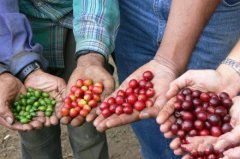
How much do you know about coffee?
Coffee (Xoffea arabica Linn) is a perennial evergreen shrub or small tree of Rubiaceae. It is a kind of horticultural perennial economic crop with the characteristics of fast growth, high yield, high value and wide market. Wild coffee trees can grow to 5 to 10 meters tall, but coffee trees grown on plantations are cut to less than 2 meters in order to increase fruit yield and facilitate harvesting. coffee
2015-04-28 boutique coffee knowledge you know how much
Coffee filter paper for ordinary cups in flowering season of coffee trees
Coffee trees bloom in February-March (Northern Hemisphere) or June-July (Southern Hemisphere), depending on the origin. The flower color is white, Corolla 5-lobed, reversing, sending out a strong aroma. Coffee flowers are similar to jasmine in appearance and smell. When they bloom, they grow in clusters on the branches of coffee trees, and the flowering period is about 3-5 days. From planting to fruiting, it takes 3-5 years and 6-10 years of coffee.
2016-06-06 Coffee flowering season ordinary cup filter paper coffee tree club florescence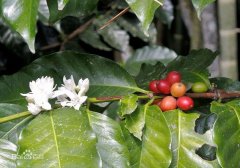
Coffee bean growing environment boutique coffee Hawaii Kona Colombian coffee beans
The suitable climate in Colombia provides a real natural pasture for coffee. Coffee trees in Colombia are mainly cultivated in the Andes, on steep slopes about 1300 meters above sea level, where the annual temperature is about 18 degrees Celsius, annual rainfall is 2000 to 3000 millimeters, latitude 1-11 15 north, longitude 72-78 west, and the specific range of elevation can exceed 2.000 meters. By
2016-04-22 Coffee beans planting environment boutique coffee Hawaii Kona Colombia Goran
What are the soil and climate requirements for growing coffee beans
Coffee tree belongs to Rubiaceae (Rubiaceae), which is a shrub or small tree. It is native to subtropical Africa or Asia. The seeds in its berries are the main raw materials of coffee. Commercially, the seeds of coffee are called coffee beans (coffee bean). Flowers and fruits of coffee trees Coffee flowers grow in leaf axils, Corolla basin-shaped, cheese-colored or white, ovary two-loculed, one ovule per locule, fruit pulp
2016-05-27 Planting coffee beans soil climate what kind requirements coffee genus Rubiaceae plant
What kind of planting environment do coffee trees need to have? do coffee trees require a high planting environment?
The first flowering period of the coffee tree is about three years old. the white five-petal tube-shaped flowers are filled with a faint scent of jasmine and the inflorescences are arranged in dense clusters. Flowers wither after two or three days of blooming and begin to bear fruit after a few months. The fruit is a drupe with a diameter of about 1.5 cm, which is green at first, then turns yellow gradually, and turns red after ripening, which is very similar to cherries.
2016-07-11 Growing coffee need have what kind environment requirement high?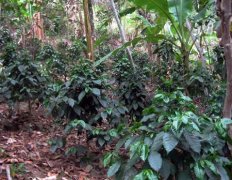
The production of coffee basic knowledge and high-quality coffee beans
Coffee trees take 3-5 years from planting to fruiting. 6-10 years of coffee trees are the most likely to bear fruit, about 15-20 years, is the harvest period. Coffee trees are usually bred in nurseries and grow into saplings, and then moved to coffee farms a year later, in full compliance with the way the Arabs planted and cultivated coffee trees. Coffee trees will continue to take root downward and upward in the first four or five years of their growth.
2014-12-28 Coffee basics common sense boutique coffee beans production coffee planting results 3-
How much do you know about coffee, boutique coffee?
Coffee (Xoffea arabica Linn) coffee is a perennial evergreen shrub or small tree of Rubiaceae. It is a horticultural perennial cash crop with the characteristics of fast growth, high yield, high value and wide market. Wild coffee trees can grow to a height of 5 to 10 meters, but coffee trees planted on the manor are often cut to less than 2 meters in order to increase their fruit and facilitate harvesting. Coffee
2015-02-05 Coffee common sense boutique basic knowledge you know how much coffee Xoffea
The planting method of Coffee Tree the planting environment of coffee tree introduces what kind of environment is most suitable for growing coffee
Coffee fruit contains two seeds, namely coffee beans. The two beans are connected face to face with each other on one side of the plane. Each coffee bean has a thin outer film, which is called silver skin, and its outer layer is covered with a yellow outer skin, called endocarp. The whole coffee bean is wrapped in a sticky pulp to form coffee pulp, which is soft and sweet.
2016-07-11 Coffee planting way environment introduction what kind suitable coffee fruit contains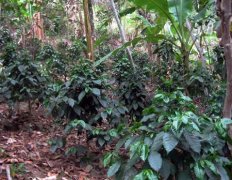
The general knowledge of fine coffee explains the production of coffee beans in detail.
Coffee trees take 3-5 years from planting to fruiting. 6-10 years of coffee trees are the most likely to bear fruit, about 15-20 years, is the harvest period. Coffee trees are usually bred in nurseries and grow into saplings, and then moved to coffee farms a year later, in full compliance with the way the Arabs planted and cultivated coffee trees. Coffee trees will continue to take root downward and upward in the first four or five years of their growth.
2014-11-12 Coffee knowledge coffee common sense coffee bean production
The basic knowledge of high-quality coffee
Coffee is a perennial evergreen shrub or small tree of Rubiaceae. It is a horticultural perennial cash crop with the characteristics of fast growth, high yield, high value and wide market. Wild coffee trees can grow to a height of 5 to 10 meters, but coffee trees planted on the manor are often cut to less than 2 meters in order to increase their fruit and facilitate harvesting. The opposite leaves of coffee trees are long oval.
2015-03-20 Coffee variety boutique basics common sense coffee grass perennial evergreen shrub
Colombian coffee growing environment
The pure taste of Colombian coffee comes from Colombia's natural environment with the most favorable conditions for coffee growth. But beyond that, it is inseparable from the hard work of local growers. In Colombia, coffee cultivation has reached 1.07 million hectares, there are about 302000 coffee plantations in the country, and 30 to 40 per cent of the rural population depends directly on coffee production. Columby
2016-06-06 Colombia coffee planting environment pure taste from
Learn about coffee history and culture-Father of coffee tree
The father of coffee trees-Martinique (martinque), a French island with an area of only 1100 square kilometers, she is the place where the history of coffee cultivation in Central America began. She witnessed the growth and destruction of an industry. There is a special story about coffee coming from France to America. Coffee trees introduced from Holland in 1714 have been growing in the Royal Botanic Gardens in Paris.
2015-11-26 understand coffee father of history and culture
How much do you know about the basics of fine coffee?
Coffee (Xoffea arabica Linn) coffee is a perennial evergreen shrub or small tree of Rubiaceae. It is a horticultural perennial cash crop with the characteristics of fast growth, high yield, high value and wide market. Wild coffee trees can grow to a height of 5 to 10 meters, but coffee trees planted on the manor are often cut to less than 2 meters in order to increase their fruit and facilitate harvesting. Coffee
2014-12-03 Boutique coffee basics common sense knowledge you know how much Xoffea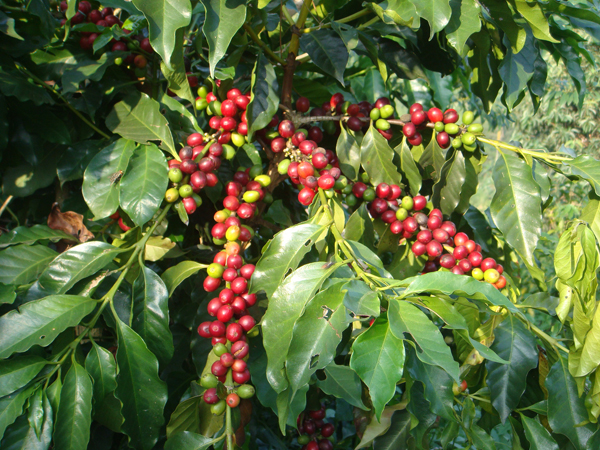
Explain the planting and cultivation of coffee trees in detail to understand the growth environment and needs of coffee trees.
(1) Seedling propagation Coffee seedling propagation can be divided into seed propagation and asexual reproduction. 1. Seed propagation (1) seed collection, seed washing and seed storage during the full ripening period of coffee (the full ripening period of medium-grain coffee in Hainan Island is from February to March, and that of small seed is from September to November). The fully ripe fruits are picked from strong and high-yielding mother trees to make seeds. Immediately after the fruit is harvested, peel and wash the seeds. The method is to place the fruit.
2015-11-25 Details explanation coffee planting cultivation understanding growth environment demand
The basics of coffee beans how much do you know about coffee?
Coffee (Xoffea arabica Linn) coffee is a perennial evergreen shrub or small tree of Rubiaceae. It is a horticultural perennial cash crop with the characteristics of fast growth, high yield, high value and wide market. Wild coffee trees can grow to a height of 5 to 10 meters, but coffee trees planted on the manor are often cut to less than 2 meters in order to increase their fruit and facilitate harvesting. Coffee
2015-03-10 Coffee beans basic knowledge coffee knowledge you know how much
Cultivation techniques of Coffee Tree Seedling Propagation and Establishment of Coffee Garden
(1) Seedling propagation Coffee seedling propagation can be divided into seed propagation and asexual reproduction. 1. Seed propagation (1) seed collection, seed washing and seed storage during the full ripening period of coffee (the full ripening period of medium-grain coffee in Hainan Island is from February to March, and that of small seed is from September to November). The fully ripe fruits are picked from strong and high-yielding mother trees to make seeds. After the fruit is harvested, peel and wash the seeds immediately. The method is to remove the fruit.
2015-10-07 Coffee cultivation techniques seedlings propagation coffee garden establishment
Dirkley-- the Father of Coffee trees in Central and South America
In the middle of the 18th century, cafes were opened in major cities in Europe, and the huge demand for coffee led to the popularity of growing coffee in Central America. At present, most of the Tibica coffee trees in Central America are related to the coffee mother tree transplanted by Deckley. In 1777, 19 million coffee trees were planted on Martinique Island alone. Haiti, Puerto Rico and Cuba in the Caribbean followed suit to grow coffee.
2015-04-02 Klee Central and South America Coffee Father of Coffee 18th Century Mid-Mid Cafe all over Europe
The planting method of coffee tree the main role of coffee beans in the country of origin
Coffee is a perennial evergreen shrub or small tree of Rubiaceae. It is a horticultural perennial cash crop with the characteristics of fast growth, high yield, high value and wide market. Wild coffee trees can grow to a height of 5 to 10 meters, but coffee trees planted on the manor are often cut to a height of less than 2 meters in order to increase the amount of fruit and facilitate harvesting. The opposite leaves of coffee trees are long oval.
2016-03-08 Coffee planting mode condition origin coffee beans main function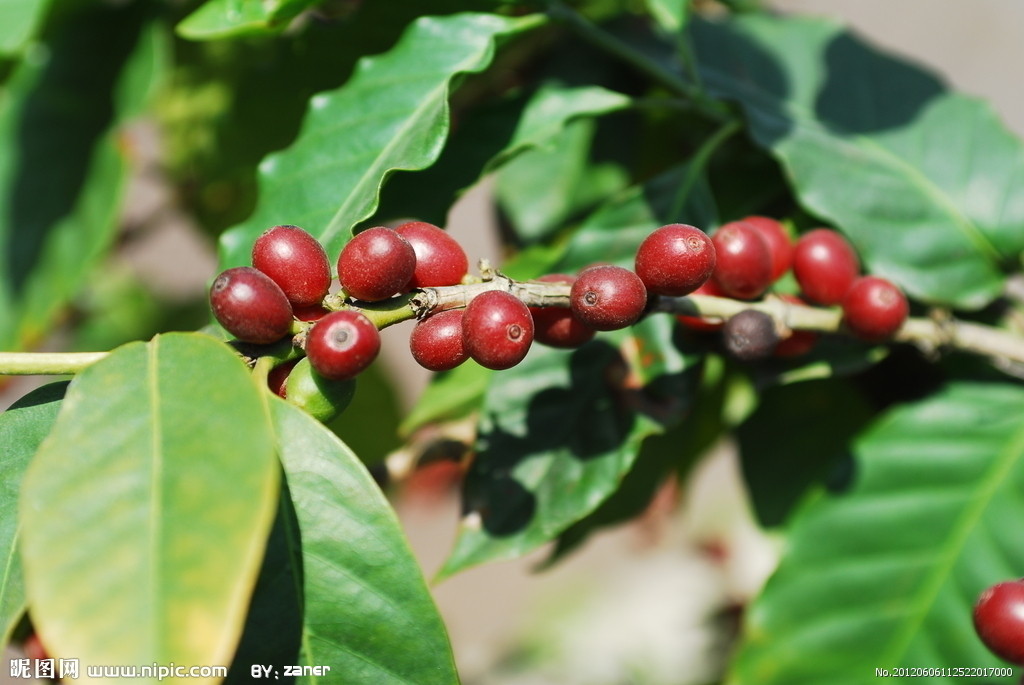
How long will it take for coffee to be planted before it can be harvested? The harvest from coffee tree planting to coffee beans is long.
Coffee trees take 3-5 years from planting to fruiting. 6-10 years of coffee trees are the most likely to bear fruit, about 15-20 years, is the harvest period. Coffee trees are usually bred in nurseries and grow into saplings, and then moved to coffee farms a year later, in full compliance with the way the Arabs planted and cultivated coffee trees. Coffee trees will continue to take root downward and upward in the first four or five years of their growth.
2016-01-07 Coffee planting how long ability harvest coffee beans long coffee knot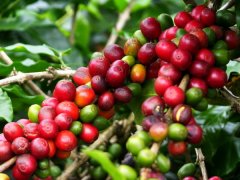
Which countries and regions can grow coffee? Why?
Since coffee trees are tropical plants, they need to be planted in warm places. The main planting area is distributed between latitude 25 south and latitude 25 north with the equator as the center, so this area is also called the coffee belt. However, even in the coffee belt, Arabica and Robeska do not grow in exactly the same area, but grow up in an environment that is more suitable for their own growth.
2015-09-10 Which country region talent cultivation coffee why because tropical